Introduction
Acne vulgaris is a chronic inflammatory disorder of the pilosebaceous unit, presenting with comedones, papules, pustules, nodules, and post-inflammatory sequelae. Moderate to severe acne, especially when involving inflammatory lesions on the cheeks and jawline, often warrants systemic therapy to prevent scarring and psychological morbidity. Isotretinoin remains the most effective disease-modifying agent, while adjunctive antimicrobials and topical retinoids offer synergistic benefit.
Case Presentation
A 24-year-old female presented with a 6-month history of worsening inflammatory acne predominantly affecting the cheeks and mandibular area, associated with tenderness, flares during menses, and developing post-inflammatory erythema and hyperpigmentation.
Clinical examination revealed multiple inflammatory papules, pustules, nodules, and a few cystic lesions, consistent with Grade 3–4 acne vulgaris. No history of drug triggers, anabolic agents, or endocrine symptoms. No history of any menstrual irregularities.
Diagnostic Approach
Diagnosis was clinical based on:
- Inflammatory lesion load
- Distribution on lower face
- Presence of nodules
- Absence of scarring alopecias or infectious folliculitis
Differentials Excluded:
- Gram-negative folliculitis
- Perioral dermatitis
- Folliculitis decalvans
- PCOS-related acne (hormonal profile normal)
Baseline Labs Before Isotretinoin:
- LFT, lipid profile – normal
- Urine pregnancy test – negative
- Psychological screening – stable
Pathophysiology
Acne arises from four interacting mechanisms:
- Follicular hyperkeratinization → comedone formation
- Sebaceous hyperactivity (androgen mediated)
- Cutibacterium acnes colonization
- Inflammatory cascade → papules, pustules, nodules
Isotretinoin uniquely targets all four, reducing sebaceous gland size and altering keratinocyte differentiation, leading to long-term remission.
Treatment Approach
Systemic Therapy
Primary Systemic Agent
1. Isotretinoin 20 mg daily
- Initiated based on severity and scarring risk
- Emphasis on moisturization, sun protection, and lab monitoring
2. Oral Azithromycin Pulse
- 500 mg three times weekly for 3 weeks
- Used as bridging anti-inflammatory control while isotretinoin titrated
Topical Regimen
- Adapalene 0.1% at night (alternate nights initially)
- Niacinamide 4–5% mornings for barrier repair and inflammation
- AHA-based cleanser (Ahaglow) once daily to support comedolysis
Adjunctive Modalities
Evidence-supported clinical add-ons explained as options:
Topical Options:
- Benzoyl peroxide (2.5–5%) to prevent resistance
- Clindamycin short-course spot therapy
- Zinc-based soothing gels
- Post-treatment PIH therapies (azelaic acid, tranexamic acid, kojic acid)
Hormonal Therapies (for appropriate candidates):
- Combined OCPs
- Spironolactone
- Cyproterone acetate
Procedural Modalities:
- Chemical peels (salicylic/glycolic)
- Comedone extraction
- Photodynamic therapy
- IPL for erythema
- Microneedling for scars (after isotretinoin window)
Clinical Course
At 2 months, the patient demonstrated:
- Marked reduction in inflammatory lesions
- Smoother texture
- Diminished erythema
- No new nodules
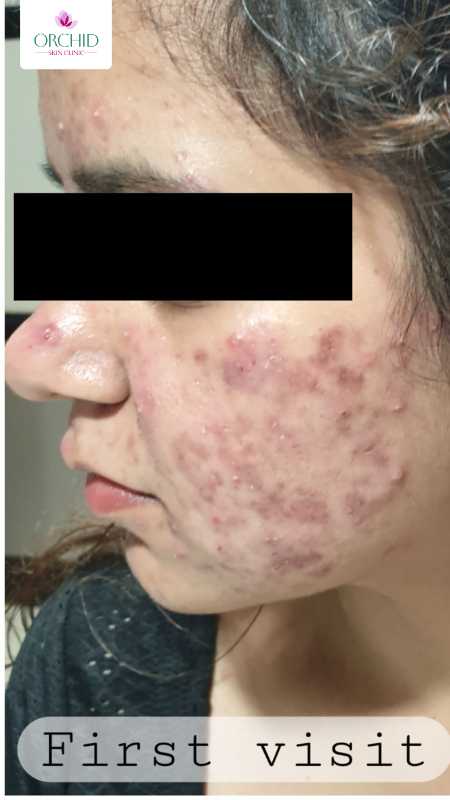
First Visit
Multiple inflammatory papules, pustules, and nodules with post-inflammatory erythema
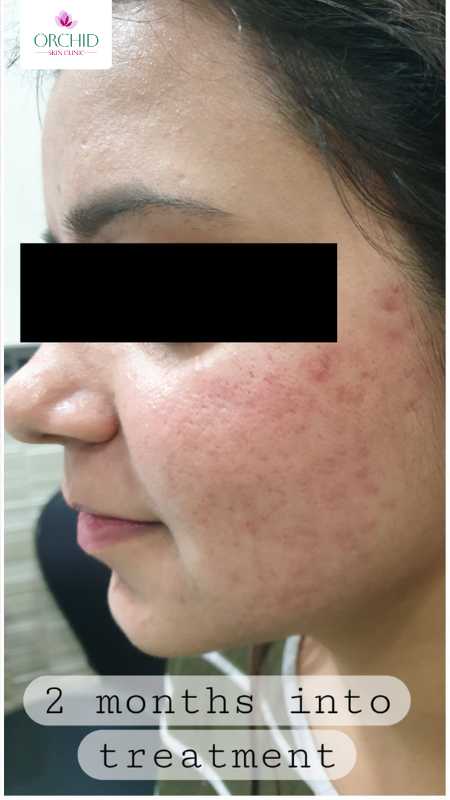
Two Months Into Treatment
Marked reduction in inflammation, improved texture, and minimal new lesions
Treatment continued with isotretinoin dose escalation toward cumulative target.
Clinical Implications
This case demonstrates:
- Early initiation of systemic therapy prevents scarring
- Combination regimens improve tolerance and outcomes
- Structured follow-up improves adherence
- Patient counselling reduces anxiety and picking behaviors
Moderate–severe acne responds best to multi-modal staged therapy, not isolated prescriptions.
Conclusion
This case highlights the successful management of Grade 3/4 inflammatory acne using systemic isotretinoin, pulse azithromycin, and topical retinoid-based combination therapy, achieving significant improvement within two months and preventing long-term scarring. A personalized, layered therapeutic strategy remains the gold standard for durable clearance and restoration of skin confidence.