Introduction
Most people think skin problems begin on the surface. In reality, many chronic skin conditions have roots much deeper—inside the gut. Over the last decade, research has shown a strong connection between digestive health and inflammatory skin diseases. This relationship is known as the gut-skin axis.
Understanding this connection can explain why some skin conditions don't improve despite good skincare, medications, or procedures—and why a holistic approach often gives better, longer-lasting results.

What Is the Gut-Skin Axis?
The gut-skin axis refers to the constant two-way communication between the gastrointestinal system, the immune system, and the skin.
Your gut contains:
- Trillions of bacteria (the gut microbiome)
- A large portion of your immune system
- A barrier that controls what enters your bloodstream
When the gut is healthy, it helps regulate inflammation. When it's disturbed, it can trigger systemic inflammation, which often shows up on the skin.

How Gut Imbalance Shows Up on the Skin
An unhealthy gut microbiome or poor digestion can lead to:
- Increased intestinal permeability ("leaky gut")
- Release of inflammatory chemicals
- Immune system over-activation
These internal changes can manifest externally as:
- Persistent acne
- Redness and sensitivity
- Itching and rashes
- Delayed healing
- Frequent flare-ups despite treatment
Skin Conditions Commonly Linked to Gut Health
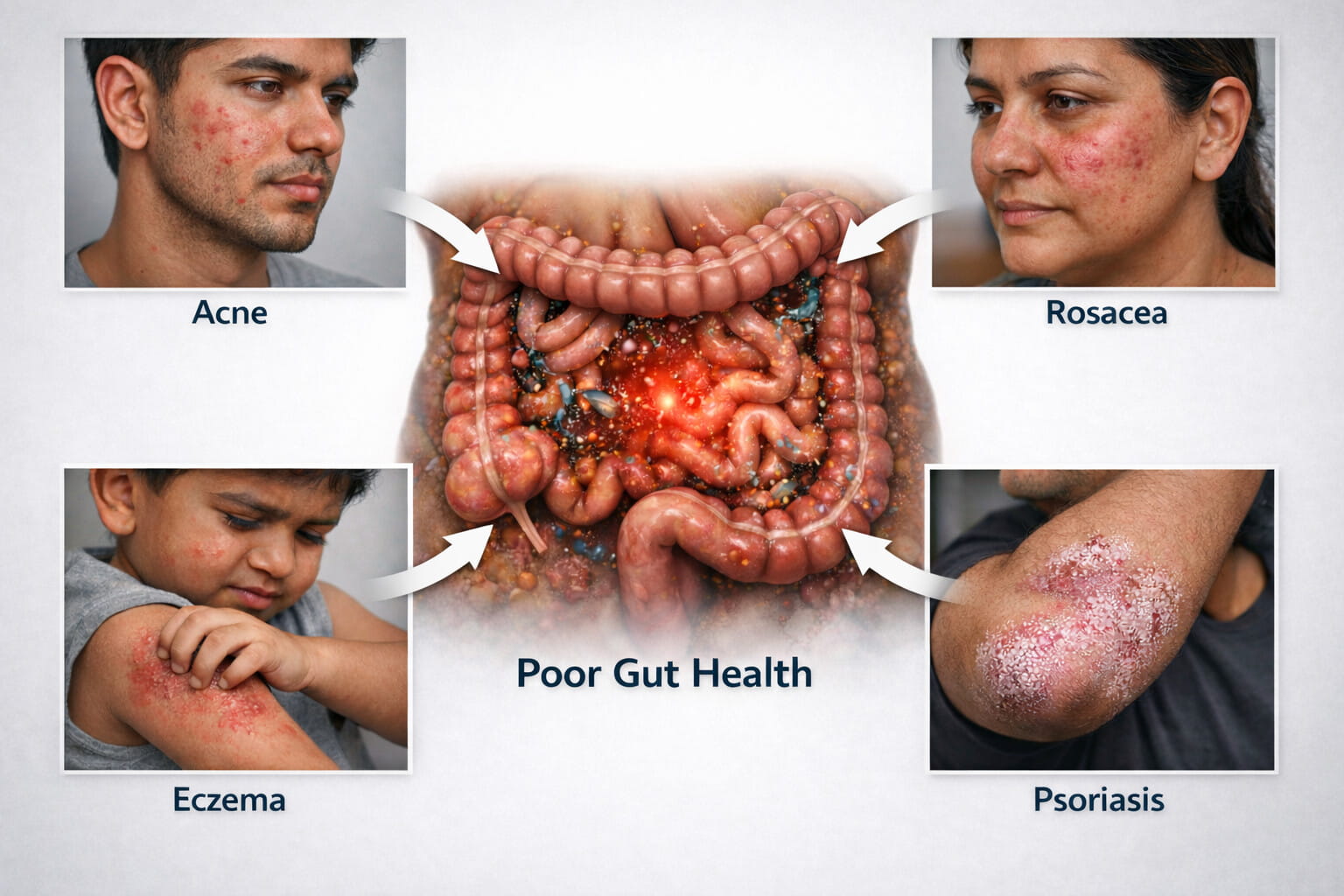
1. Acne
Studies show that people with acne often have altered gut bacteria. Gut inflammation may increase systemic inflammation and sebum production, worsening acne severity.
2. Rosacea
Rosacea has been linked to gut conditions like H. pylori infection and small intestinal bacterial overgrowth (SIBO).
3. Eczema (Atopic Dermatitis)
Children and adults with eczema often show gut microbiome imbalance, contributing to immune dysregulation and skin barrier dysfunction.
4. Psoriasis
Psoriasis is a systemic inflammatory disease. Gut inflammation can amplify immune responses that worsen plaques and flare-ups.
5. Chronic Urticaria
In some patients, unexplained hives are associated with gut infections or food intolerances.
The Microbiome Connection
Your gut bacteria produce short-chain fatty acids (SCFAs) like butyrate, which strengthen your intestinal barrier and regulate immune responses. When bacterial diversity decreases, SCFA production drops, allowing harmful substances to enter the bloodstream and trigger skin inflammation.
Can Probiotics Improve Skin?
Probiotics may help by:
- Restoring healthy gut bacteria
- Reducing systemic inflammation
- Modulating immune responses
However, not all probiotics are the same. Different strains work for different conditions, and probiotics are supportive, not standalone treatments. Self-medicating with random supplements often leads to disappointment.
Common Gut-Related Mistakes That Worsen Skin Problems
Habits that disturb gut balance and can quietly worsen skin inflammation over time include:
- Overuse of antibiotics without medical guidance
- Frequent junk food and ultra-processed diets
- Excess sugar and refined carbohydrates
- Skipping meals or extreme dieting
- Over-reliance on "detox" products
Foods That Support Healthy Skin From Within
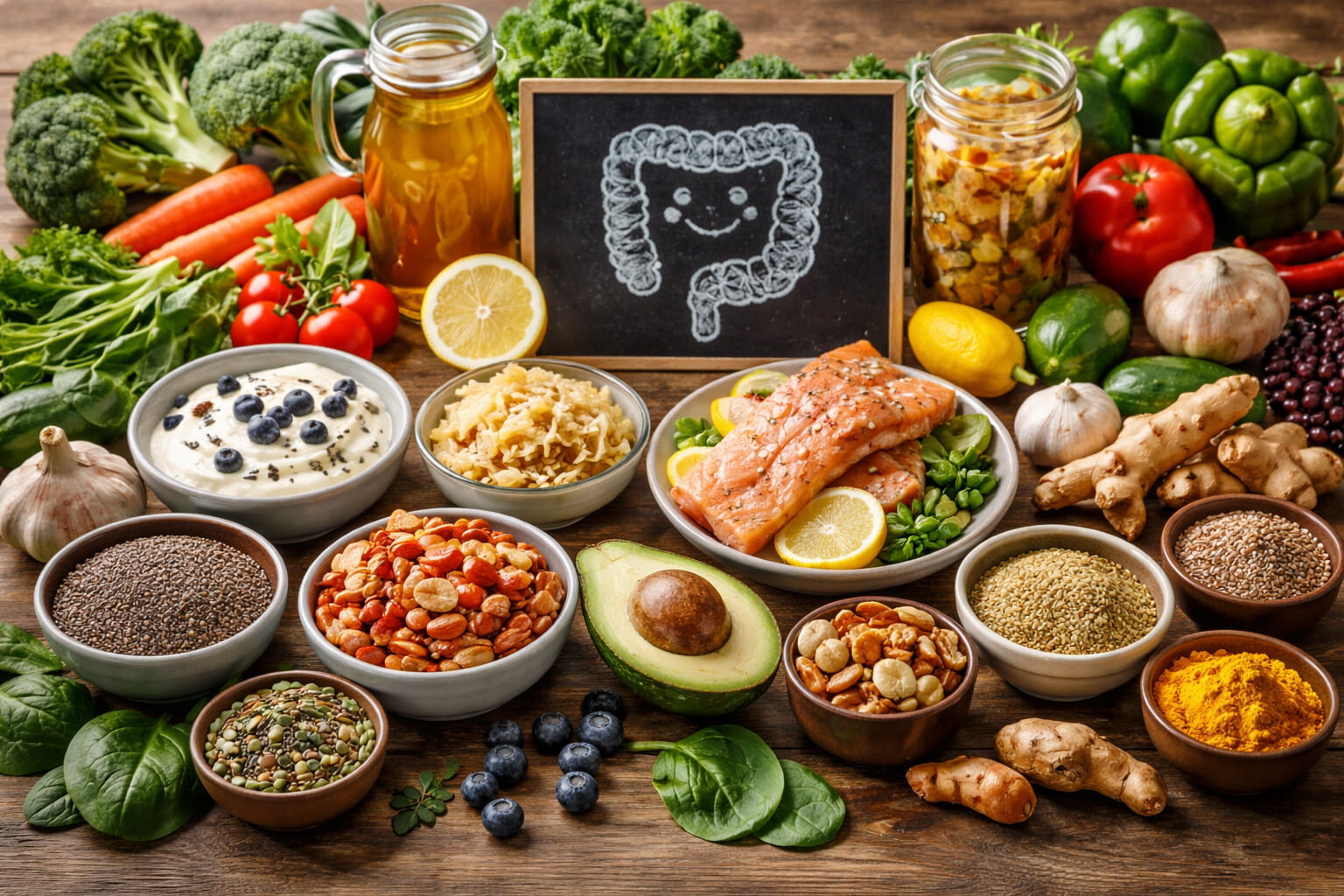
A gut-friendly diet that supports skin health includes:
- Fibre-rich foods – vegetables, fruits, whole grains
- Fermented foods – curd, kefir, buttermilk
- Omega-3 fatty acids – nuts, seeds, fish
- Adequate hydration – water intake
- Balanced protein intake
Consistency matters more than perfection.
When Gut Health Alone Is Not Enough
While gut health plays an important role, it is not a replacement for dermatological treatment.
Many skin conditions still require:
- Prescription medications
- Topical therapies
- Procedural treatments
- Hormonal evaluation when needed
The best outcomes occur when internal health and skin-directed treatments work together.
A Dermatologist's Take on Gut Supplements and "Detox" Trends
There is no scientific evidence supporting:
- Extreme detox cleanses
- Juice fasts for skin healing
- "One supplement cures all" claims
These approaches can actually worsen nutritional deficiencies and trigger flare-ups. Gut health should be addressed safely, gradually, and individually.
Final Thoughts
Your skin often reflects what's happening inside your body. Persistent skin problems are not always about the "wrong product" or "bad skincare." Sometimes, the issue lies in chronic inflammation, gut imbalance, or immune dysregulation.

A thoughtful, evidence-based approach that considers both internal health and dermatological care leads to the most reliable and lasting skin improvement.
Next Steps
If your skin condition keeps recurring despite treatment, it may be time to look beyond the surface. Consider evaluating your digestive health, discussing potential food sensitivities, and exploring a holistic approach with both a dermatologist and a nutritionist.